Shelter, clothing, and fire
Why are shelter, clothing, and fire important?
You can only last three to four hours in extreme conditions without adequate shelter. Maintaining your body temperature in hot or cold temperatures is vital for survival. This can be hard to do if you are out of your normal environment or the power to your home is out.
The main purpose of a shelter is to help your body stay at its normal temperature of about 98.6°F. Your brain uses a center called the hypothalamus to control your internal temperature. It does this by tightening or widening your blood vessels, making you sweat, or making you shiver. However, your body can only do so much on its own when faced with extreme temperatures and weather.
Warning signs
Hypothermia happens when your body temperature drops below 98.6°F.
- Early signs: Shivering (if you are shivering, you are in the first stage).
Go inside where it is warm. - Worsening signs: Slurred speech, feeling confused or uncaring (apathy), losing balance, and having trouble using your hands.
Quickly go inside where it is warm. Sip warm drinks like cocoa or soup. Not alcohol or caffinated drinks. Call 911 and get emergency help.
Hyperthermia happens when your body temperature rises above 98.6°F.
- Early signs: Extreme thirst, heavy sweating, nausea, and head pain.
Find a place where it is cool. Sip cool drinks. - Worsening signs: Dizziness, slurred speech, confusion, trouble walking, vomiting, muscle cramps, and rapid breathing or pulse.
Quickly go inside where it is cool. Sip cool drinks water and sports drinks, not caffinated sodas. Apply cold packs. Call 911 and get emergency help.
Warning: Both conditions can quickly become deadly. Always keep a close eye on yourself and others in extreme weather.
Shelter, clothing, and fire action list

Science of sheltering
Things that can affect body temperature:
- Weather extremes: Extreme heat, extreme cold, wind, and rain all affect your temperature.
- Wetness: If you get wet from rain, being in water, or sweat, your body loses heat much faster than when you are dry.
- Hydration and diet: Your blood uses water to move heat around your body. Being well-hydrated, healthy, and well-fed helps your body manage its temperature.
- Physical activity: Moving around and exercising creates internal heat.
- Drugs and alcohol: Substances like alcohol, nicotine, or medications mess with your body's temperature controls. Alcohol might make you feel warm because it relaxes your muscles, but it actually makes you lose heat much faster.
The purpose of a shelter is to help your body maintain its normal temperature. If you understand these concepts of how heat moves, you can use your the things around you to make effective, life saving shelters for the given circumstances. Remember that heat always travels from warmer areas to colder areas.
How heat moves
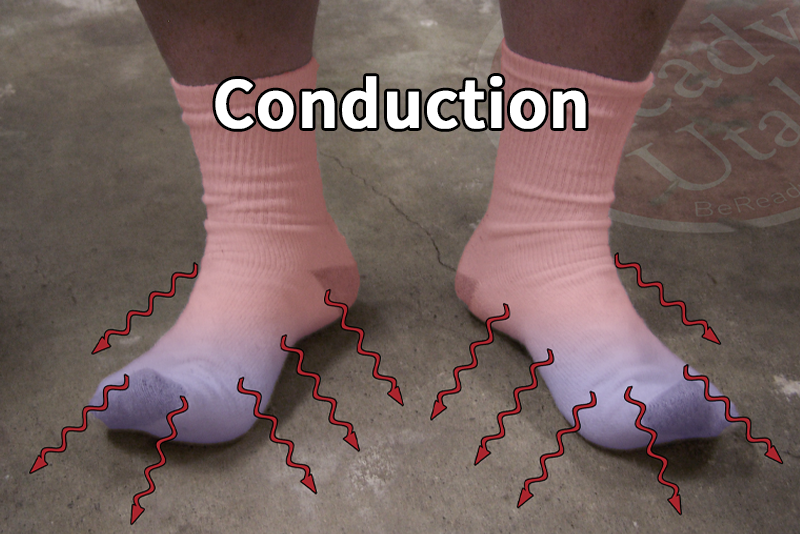
Conduction:
- What it is: Heat moving directly from one solid object to another by touching, like standing barefoot on a cold floor.
- How to manage it: In the cold, put an insulating pad or layer between your sleeping bag and the ground so the cold earth doesn't drain your body heat.
Convection:
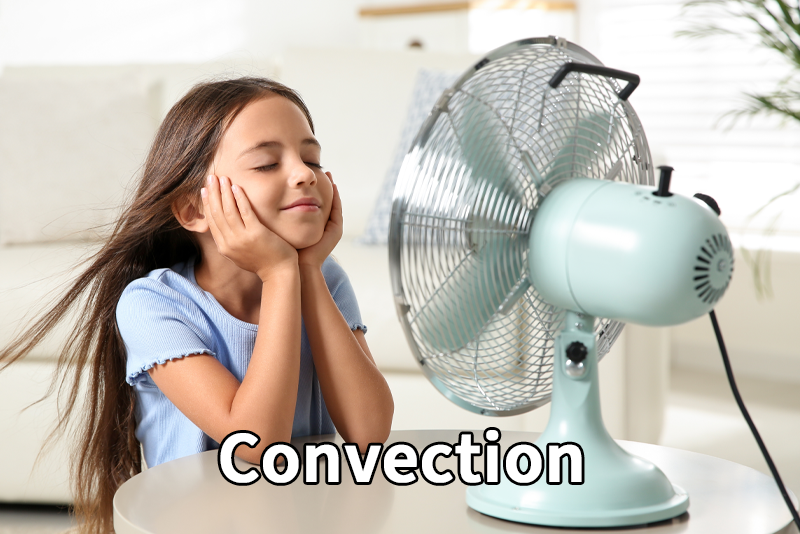
- What it is: Heat being carried away by air or water currents, like wind chill.
- How to manage it: In the cold, wear windproof clothing or build a shelter that blocks the wind. In the heat, use a fan or breeze to cool off.
Radiation:
- What it is: Heat emission, like feeling the heat from a campfire or the sun. You don't have to touch it.
- How to manage it: In the cold, wear thick clothing to hold heat in or use a reflective blanket to bounce your body heat back to you.
Metabolism:
- What it is: Converting food into energy and heat. Food is your body’s source of fuel.
- How to manage it: Eat high-calorie snacks (like energy bars or trail mix) in cold weather to keep your body burning fuel. Drink plenty of water, but avoid alcohol and caffeine—they trick your brain into feeling warm while actually speeding up heat loss.
Evaporation:
- What it is: Changing liquid into gas takes heat energy and cools things down, like sweat drying on your skin.
- How to manage it: In the heat, stay hydrated so you can sweat and cool off. In the cold, stay dry and avoid sweating so you don't freeze. Never wear cotton in the cold, as it holds moisture against your skin.
Managing heat
After learning how your body gains or losses heat, it is important to learn how to prevent or promote those heat losses and gains.
Insulation:
- What it is: Trapping air to slow down heat movement, like wearing a coat in cold weather.
- How to manage it: Air is not a good heat conductor, so it works well as a barrier. Multiple small layers of clothing trap air for insulation and allow you to regulate to a comfortable temperature by adding or removing layers as needed. Insulation prevents conduction and radiation.
Reflection:
- What it is: Bouncing heat toward or away from you, like when using a Mylar reflective blanket.
- How to manage it: Heat can be deflected and directed just like a flashlight beam and a mirror. Reflect your radiated body heat back to you in cold weather. In hot weather, reflect the sun's heat away from you. These can both be done by using reflective Mylar blankets. If used properly, Mylar blankets can reflect 90% of your body's heat back to you.
Protection:
- What it is: Keeping out of the sun, rain, wind, and physical dangers.
- How to manage it: Protect yourself from the elements. Wear a waterproof outer shell to stay warm and dry when it's cold. Wear a wide brimmed hat, light colored clothing, and sunscreen when it's hot. Put up a shelter that offers shade and blocks wind and rain.
Moisture wicking:
- What it is: Pulling water away from the body.
- How to manage it: Wool or an artificial fiber clothing like polyester, fleece, and nylon can actually pull moisture away from your skin. You do not want evaporation happening on your skin when you are cold. DO NOT wear cotton in cold weather situations since cotton holds wetness and causes evaporation next to your skin.
Cold weather layers
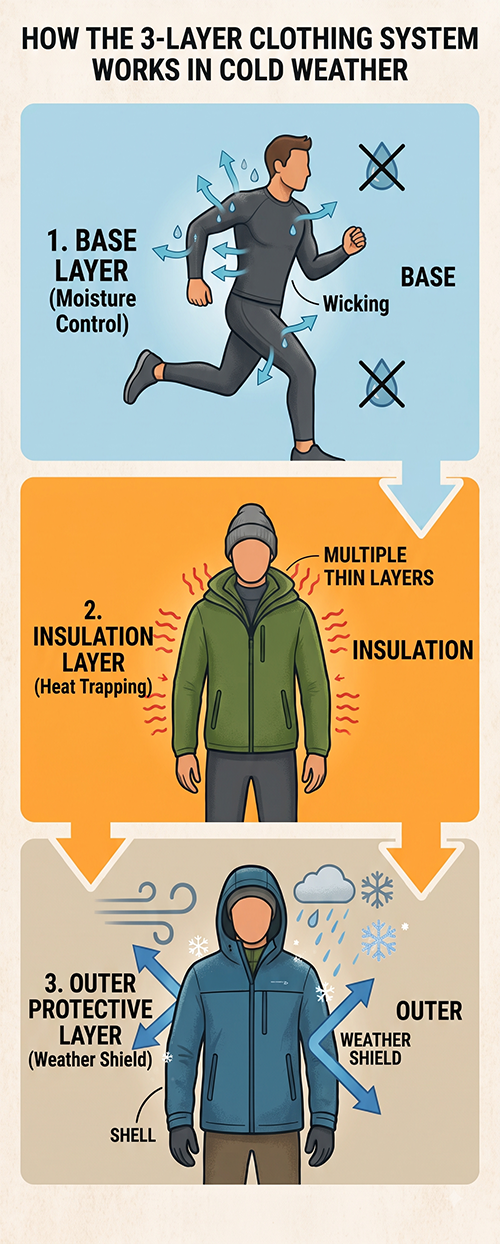
To stay warm and safe in cold weather, you should wear a 3-layer clothing system. The main goal is to trap your body heat while keeping you dry on the inside and outside.
1. Base layer (moisture control)
- What it does: Sits directly against your skin to pull sweat away from your body.
- Best materials: Synthetic (man-made) fabrics like polyester or nylon. These materials wick (drain) moisture away so it doesn't freeze or cool you down.
- What to avoid: Never wear cotton (including cotton t-shirts, underwear, or thermals) in the cold. Cotton acts like a sponge, holding water against your skin and quickly draining your body heat.
2. Insulation layers (heat trapping)
- What it does: Multiple small layers of breathable fabric like wool or fleece, trap warm air close to your body to keep you warm, while still letting moisture escape.
- Best materials: Breathable items made of wool or fleece.
- Why layers work better than one big jacket: Wearing multiple thin layers traps air between them, creating many small insulation barriers. You can easily add or take off clothing layers to adjust to your temperature comfort level. A bulky jacket is only one big layer, making it difficult to be at a comfortable temperature.
- Emergency shelter tip: Wool or fleece blankets are great for shelters. You can never have too many blankets. If you do run out of blankets, you can stuff dry leaves, crumpled paper, or newspaper into your shelter to trap insulating air around you.
3. Outer protective layer (weather shield)
- What it does: Protects you from external elements like wind, rain, snow, and sun.
- Best materials: For wet or snowy environments, look for water-resistant fabrics that let sweat escape while still repelling outside moisture.
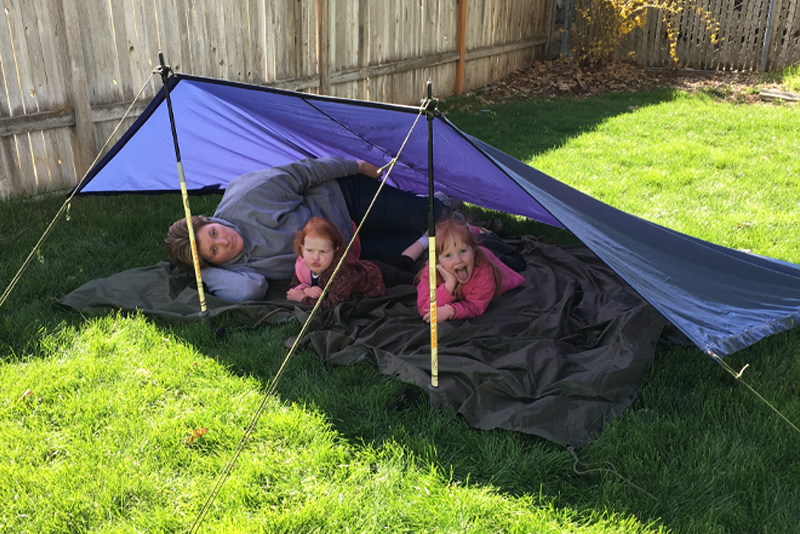
- Shelter protection: Tarps protect you from cold ground and moisture, while tents block wind and weather. Mylar reflective tents and blankets reflect your body heat back to you in the cold. Any safe and stable structures that block wind, rain, and sun can save your life.
Disaster supply kit: Shelter, clothing, and fire
Disaster supply kits need to be unique for each individual according to your own needs, abilities, and wants. "Be ready" with the right shelter, clothing, and means of making fire in your emergency kits.

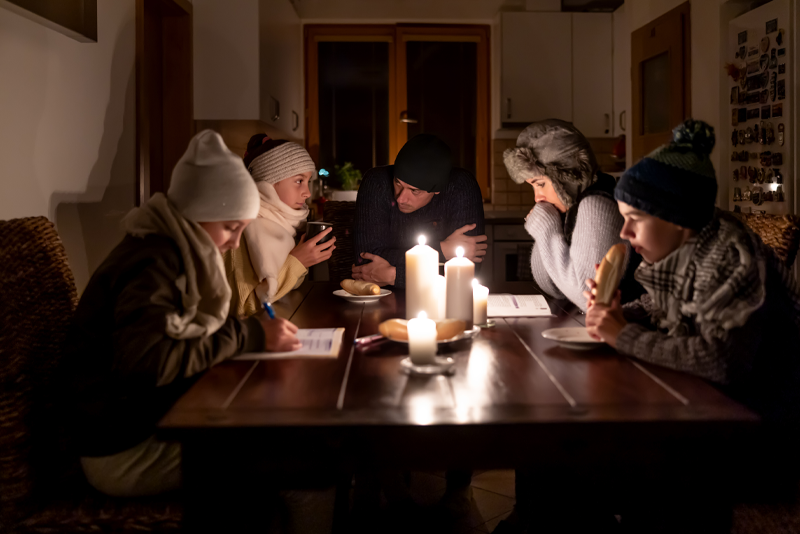
Shelter at home in the cold
Just as in all preparedness plans, it is important to make your preparations before the emergency happens. Make your home ready for cold weather emergencies by applying what you have learned about emergency sheltering.
Shelter at home in the heat
Just as in all preparedness plans, it is important to make your preparations before the emergency happens. Make your home ready for hot weather emergencies by applying what you have learned about emergency sheltering.

Safely build a fire
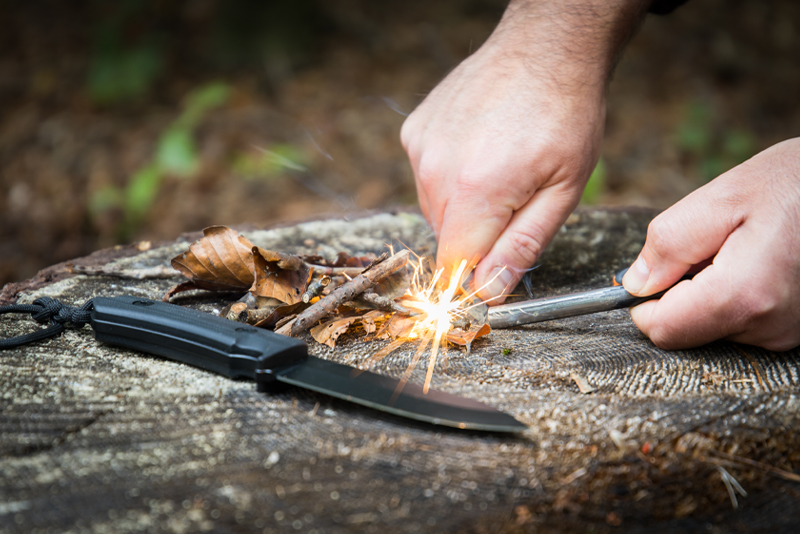
Fire provides heat, light, a means of cooking and boiling, safety, and signaling. "Be ready" to safely make a fire before your life depends on it.
Always practice fire safety.