Protective actions
Why are protective actions important?
Emergency preparedness means knowing what to do and having the tools, drive, and ability to handle a crisis safely when it counts. While having extra supplies is important after a disaster strikes, those goods won't help if you don't survive the initial event itself.
Protective actions are the immediate steps you take to keep yourself and others safe when a emergency happens.
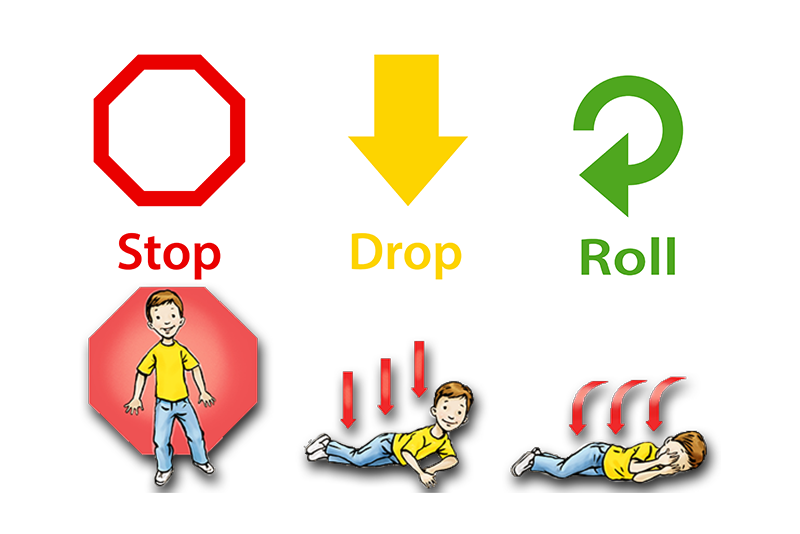
You probably learned one of the most famous protective actions in elementary school for when clothes catch fire: STOP, DROP, and ROLL.
- Stop what you are doing.
- Drop to the ground.
- Cover your face with your hands, keep your legs straight and roll over and over, back and forth, to put the flames completely out.
Then go get help from an adult.
1. Know your local hazards
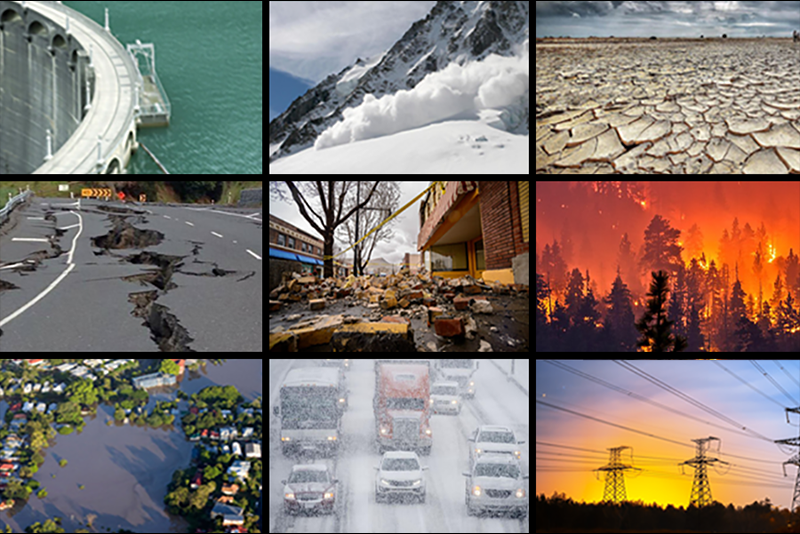
The first step in learning protective actions is to find out what potential hazards exist where you live and work, and what dangers may be encountered if the hazard becomes an emergency situation. These could include things like severe winter storms, high winds, lightning, wildfires, structure fires, floods, earthquakes, and more.
Ask your local city or county emergency manager about hazards in your area and check out our All hazards webpage for statewide hazards.
2. Play "what if?"
Sit down with your household and talk through different scenarios that you could face if impacted by any of the hazards you learned about.
Here are some examples for fire:
Fire scenarios
What if you hear a smoke alarm at home?
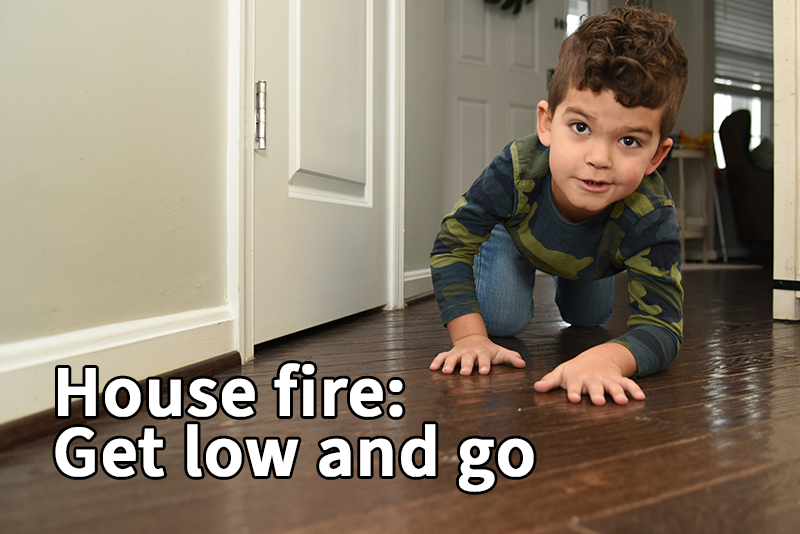
- Protective action: GET LOW and GO! Modern house fires burn fast, giving you about two minutes to escape. Heat and dangerous black smoke rise quickly, so drop to your hands and knees where the air is cooler and clearer, and crawl to the nearest exit.
- ONCE OUT, STAY OUT! Never go back inside for clothes, pets, or other people. You do not have the protective gear or training to survive inside a burning building.
What if there is a fire in the oven or microwave?
- Protective action: Turn off the power or unplug the appliance. Keep the door closed until the fire goes out and everything cools down.
What if a pan catches fire on the stove?
- Protective action: If it is small, cover it with a lid or a fire blanket, or use a kitchen fire extinguisher. Turn off the heat and let it cool.
What if the smoke alarm goes off while you are behind a closed door?
- Protective action: Touch the door with the back of your hand. If it feels cool, open it carefully, get low, and crawl out. If it feels hot, do not open it. Stuff towels or clothes (wet if possible) under the door to block the smoke, and use a window as your second exit.
Brainstorm as many "what if" scenarios as you can for each potential hazard you are likely to face. Go through one hazard at a time and see how many you can think of.
3. Learn solutions
Some hazards and scenarios may have easy to figure out solutions as to what the proper protective actions may be. Others, like earthquakes, have a lot of information, outdated information, and misinformation that need to be learned and/or corrected. Take time to learn what the safest protective actions are for the hazards in your area.
Here are some examples for earthquake:
Earthquake scenarios
During an earthquake, most injuries come from falling objects rather than collapsing buildings. Running outside is dangerous because parts of the building exterior can break off and fall on you.
What if the ground starts shaking?
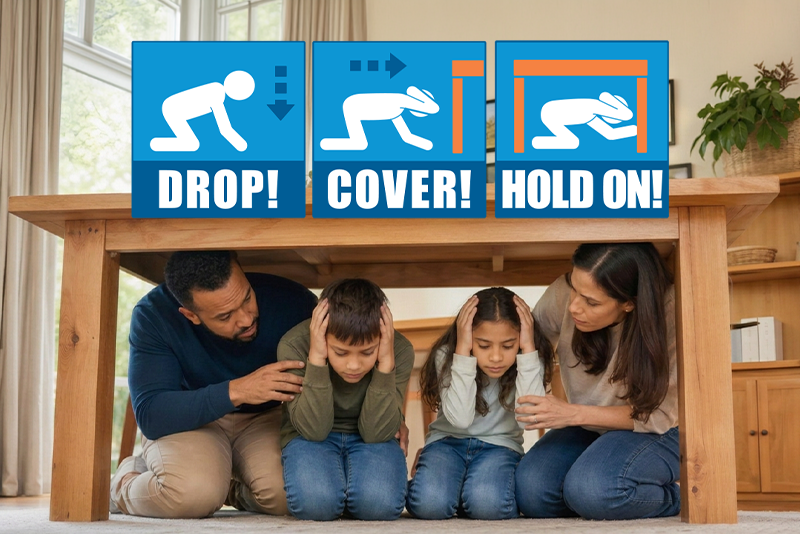
- Protective action: DROP, COVER, and HOLD ON.
- Drop to your hands and knees so the shaking does not knock you down. You are less likely to be injured of you put yourself on the ground. Do not try to exit the building. You are safer to stay indoors until the shaking stops.
- Cover your head and neck with your arms, and crawl under a sturdy desk or table for protection.
- Hold on to your shelter with one hand until the shaking stops so it doesn't shift away from you.
What if you are in a wheelchair?
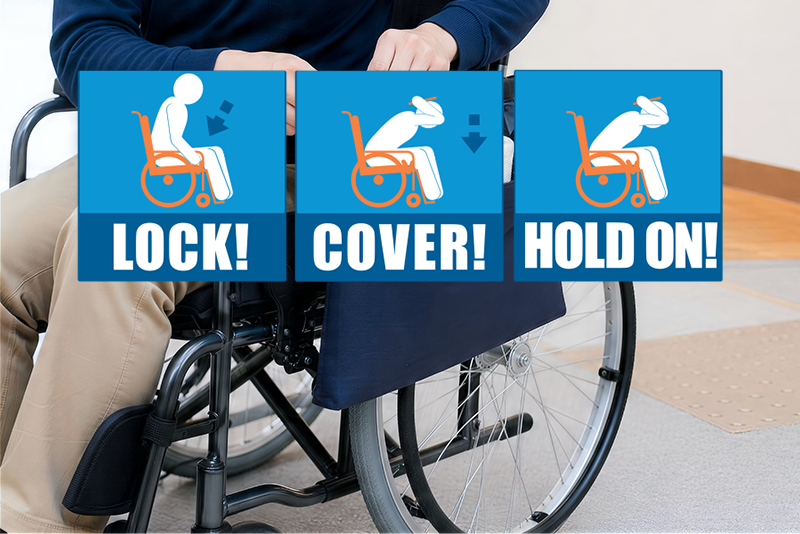
What if you are driving?
- Protective action: Safely and quickly pull over to the side of the road, making sure you are not underneath anything like overpasses, power lines, or trees that could fall on you. Set the parking break and wait for the shaking to stop.
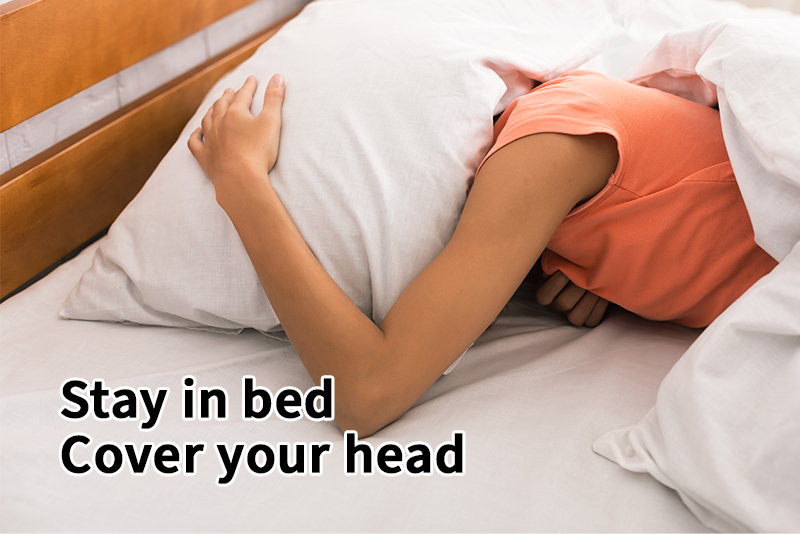
What if you are in bed?
- Protective action: Stay in bed, turn face down, and cover your head and neck with a pillow and both hands. Stay there until the shaking stops.
What other scenarios can you come up with? Can you find the proper protective actions?
Here are links for earthquake preparedness and other hazard protective actions:
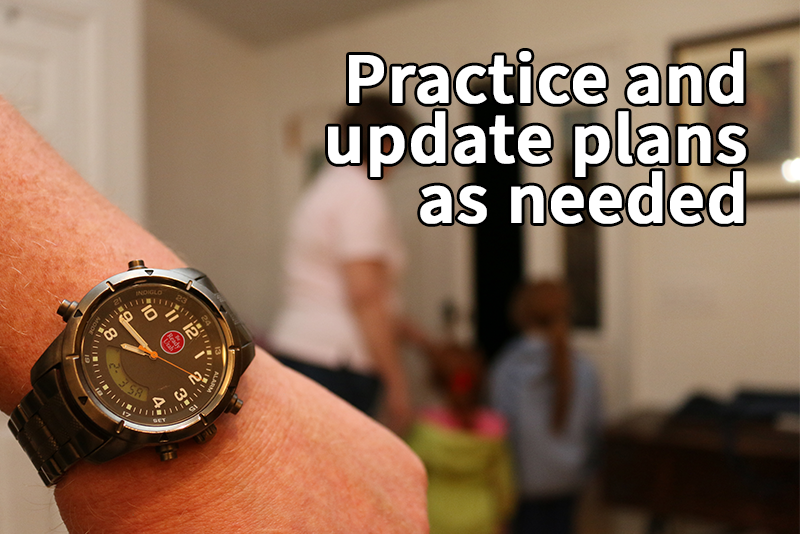
4. Teach, practice, and update plans
As you learn the protective actions for different hazards, it is important to teach them to those you care about at home, at work, and in your neighborhood.
Knowing what to do in your head is a good start, but they need to be practiced. Not every protective action has an easy to memorize phrase. Be sure to teach which protective actions are for which hazard and why.
- Practice together: Physically demonstrating and then practicing the protective actions together builds muscle memory so everyone will act quickly when seconds count. Make drills fun for kids by calling out different scenarios and seeing who can do the correct action first.
- Adjust for everyone: You may find that some protective actions will need to be modified to meet physical or mental limitations. Be patient and do the best you can.
Other protective actions
Here are some other hazards and their protective actions:
- Lightning: When thunder roars, go indoors
- Head inside a sturdy building or hard-topped vehicle immediately.
- Flood and flash flooding: Turn around, don't drown
- Never walk or drive through moving floodwaters. If water starts to rise, get to higher ground.
- Active assailant: Run, hide, fight
- Evacuate if you can; hide if you can't; fight back as a last resort.
- Nuclear or chemical incident: Get inside, stay inside, stay tuned
- Go into the middle of a building, stay away from windows, and listen for official updates. Seal the room if possible.
What other protective actions can you learn?