Child and infant preparedness
How can children and infants prepare for emergencies?
Disasters happen everywhere, and every family member can prepare. You may have a child or infant in your family or household who needs help in doing what is necessary to be ready for disasters. The steps of preparedness are the same for everyone, even though they are applied differently depending on each person’s unique needs and abilities. If you care for a child or infant, it is your responsibility to make adjustments to your preparedness plans to accommodate these unique needs.
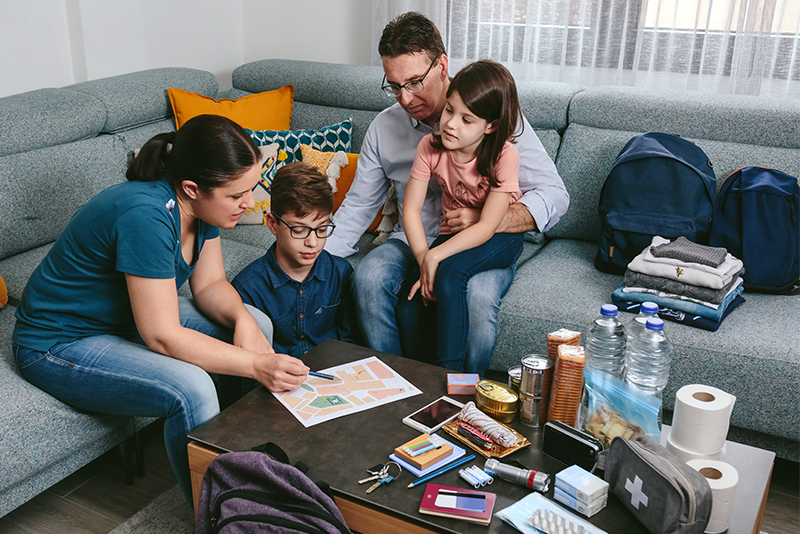
Children
Children can play a big role in getting the family ready for an emergency. Working together helps them understand what is happening and feel more in control instead of scared.
Protective actions
- Teach children about the kinds of disasters that can happen where you live and about the protective actions for those disasters. Knowing what to do in your head is a good start, but they need to be practiced. Be sure to teach which protective actions are for which hazard and why.
Emergency kits
- Have kids help put together emergency plans and help gather supplies for their own disaster supply kits. It’ll help your kids better understand what is in their kits, and why it’s there. It’ll give them a feeling of empowerment.
- Kit items should be included in their kits according to their abilities. If they are still growing, clothing should be one size larger than they are currently wearing. And don’t forget entertainment items like books, games, or toys to pass potentially stressful wait times. Don’t over-pack. Kids can not carry as much as a healthy adult.
- See the back page of the disaster supply kit brochure for more tips on child and infant kits.
Emergency plans
- Young people are particularly vulnerable during and after disasters. Without instilling fear, teach them what they need to do if they are alone or separated during an incident. This is why it is important to have children help make emergency plans and to be an important part in reviewing and practicing those plans.
Personal information and communication
- Teach children their personal information and make sure they know it by heart. Have copies of their personal identifying characteristics stored with important documents.
- Teach children how and when to call emergency numbers. Have copies of emergency contact information filled out and in their school backpacks. They shouldn’t be afraid to call 911, but they need to know it’s only for emergencies.
Emotional support
- Children react to an emergency situation based on how the adults around them react. If you respond calmly, children will more likely be calm and feel safe.
- Disasters can leave children and teens feeling frightened, confused and insecure. Their responses can be quite varied. Recognize these reactions and help children cope with their emotions. It’s difficult enough to adjust to the chaos of an emergency as an adult. For kids, it’s even harder.
Developmental changes
- Needs and abilities change as kids age, grow, and mature. About every six months to a year, depending on how much your child has grown and developed, review their personal needs, practice your emergency plans, and update your emergency kits together.
Infants
Infants rely entirely on adults for survival, and their needs are very different from older children.
Medications
- Babies get sick easily, and most standard children's medicine is not safe for them. Ask your pediatrician what medicines you should keep on hand for your baby.
Food and formula
- Babies eat small amounts frequently. Pack powdered baby formula or baby cereal in your kit. Even if a mother is nursing, stress and lack of privacy during a disaster can make nursing difficult, so having extra formula is a helpful backup.
Clothing and diapers
- Infant clothing should be one size larger than they are currently wearing. Put disposable diapers, maybe a week’s worth, in an infant disaster supply kit. Be sure to update this every two to three months until they are about two years old.
Kits
- Infants can grow pretty fast, so, for the first two years, disaster supply kit inventories need to be updated every 2 to 3 months. This can be in addition to what’s already in a diaper bag.
Safe Travel
- If you’re evacuating, don’t forget the stroller, personal baby carrier, and the baby seat.
More information
Links
- Protective actions
- Make a plan
- Ready.gov: Ready kids
- Ready.gov: Family communication plan
- Ready.gov: Helping children cope
- Ready.gov: Prepare with Pedro
- FEMA: Emergency planning with children
- FEMA: Disaster mind game for teens
- CDC: Helping children cope with emergencies
- CDC: Children before, during and after an emergency
- CDC: Reunification with children after a disaster
- CDC: Safety for pregnant women during disasters
- CDC: About children in disasters