Emergency signaling
Why is knowing emergency signaling important?
Knowing how to get someone’s attention can save a life. In most emergencies, calling 911 on your phone is the fastest way to get help. If you don't have a working phone and are far from other people, you need to know other ways to call for help. Shouting is a quick option, but your voice does not travel far, and screaming takes a lot of energy. If you are injured or exhausted, yelling might not work at all.
Do whatever you can to be seen and be heard.
Repeated series of three: An international emergency signal
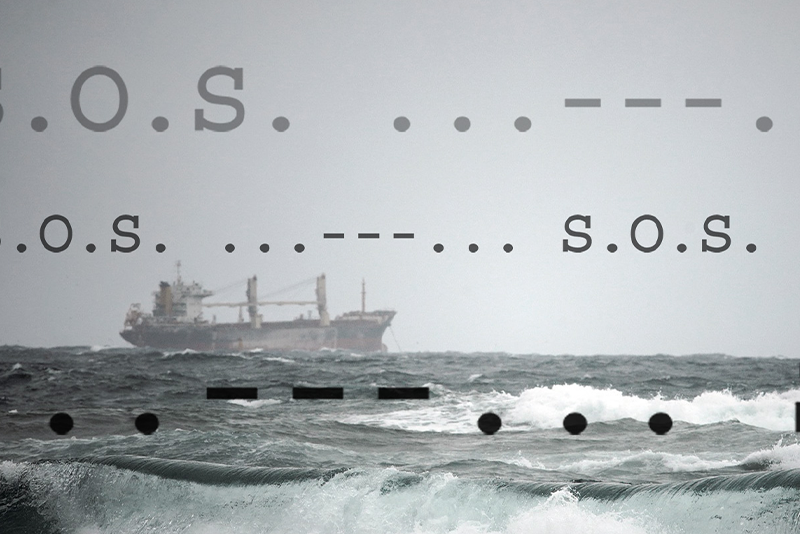
Repeating any action three times is a universally recognized call for help. Think about the Morse code S.O.S. It's three dots "...", three dashes, "---", and three dots again "...". It does not stand for "Save Our Ship" or "Save Our Souls," it is the easy to recognize repeating pattern of three to show distress.
Sound signals: Be heard
Tapping or banging: If you are trapped in a collapsed building or mine, loudly tap three times on a metal pipe or hard surface. The sound travels much farther than a human voice and stands out from background noise. Repeat the sound every one to two minutes until you get a reply.
Whistles: The sound of a whistle can carry much further than the sound of a human voice and takes a lot less effort than shouting. As long as you can breathe, you can blow a whistle. Always carry one with you in a pocket or purse. Three quick blasts on a whistle ("TWEET, TWEET, TWEET") means you need immediate help.
Car and boat horns: Stranded drivers can honk the horn three times. Reapeat it every couple of minutes.
In the same way on a boat, three repeated blasts from a boat horn or air horn signals you have an emergency situation on the water.
Radios: Press the push-to-talk button on a two-way radio three times if you cannot speak or the transmission is faint or garbled. If you don't have a set frequency for transmitting to your group or to rescuers, continually broadcast on different channels to try to reach someone. Keep in mind that basic radios (like FRS or GMRS) usually only reach about a mile if buildings or hills are in the way.
Gunshots: Hunters in distress can fire three safe shots into the air to signal for help.
It's all about the repeated series of three.
Visual signals: Be seen
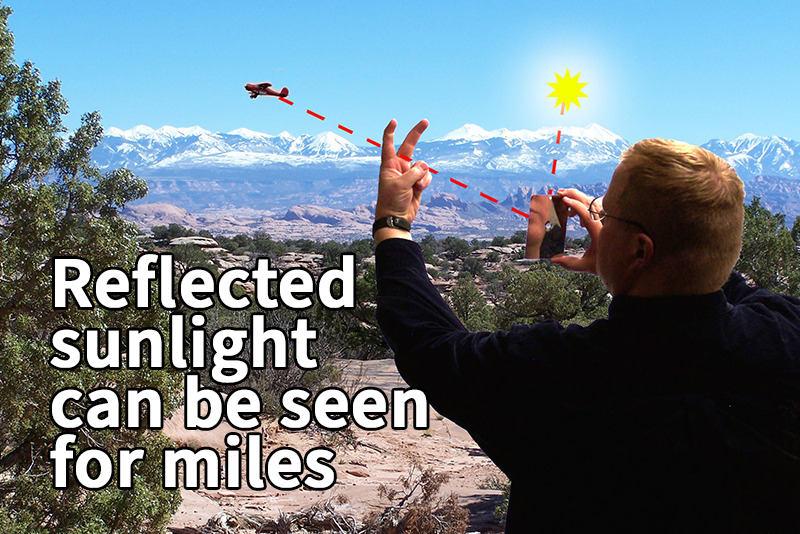
Mirrors: Reflected sunlight from a mirror can be seen from miles away. There are mirrors that are made specifically for signaling, but any mirror or reflective object will work.
- How to aim: Hold out your non-mirror arm and make a "V" shape with two fingers. Aim the "V" directly at your target (like a distant boat or person). Hold the mirror near your eye and bounce the sunlight through your two fingers toward your target.
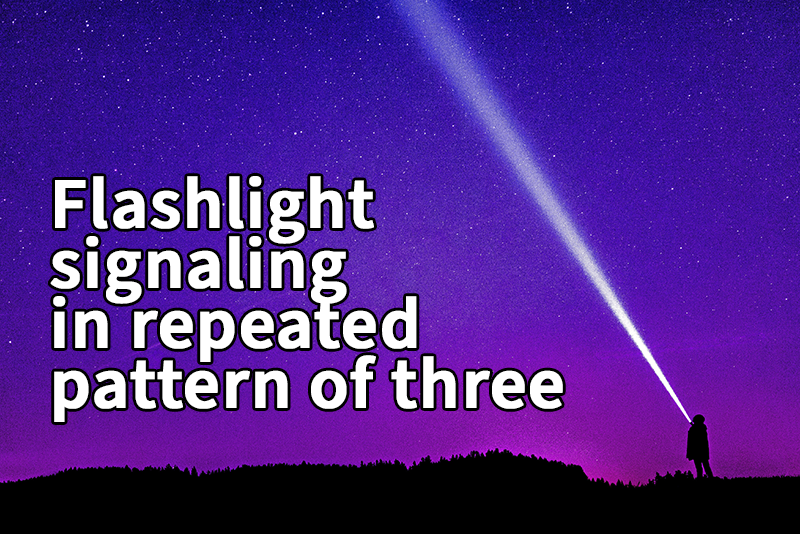
- Pattern: Flash the light toward your target in repeated groups of three to signal you need help.
- Safety note: Practice mirror signaling to figure out how to best signal in this way, but never flash mirrors at aircraft unless it is a real survival emergency.
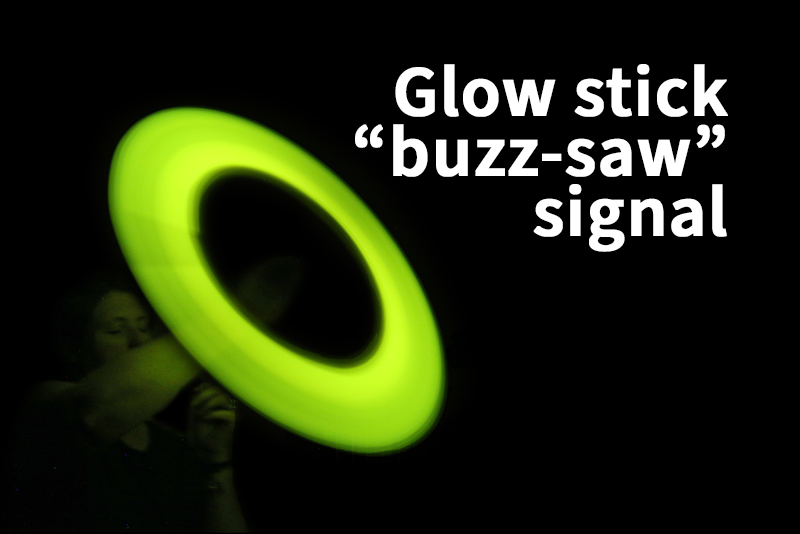
Chemical light sticks (glow sticks): Light sticks are reliable night signals because they do not rely on batteries or electricity. Light sticks only work once, but they usually glow for 8 to 12 hours.
- How to use: Snap the stick to break the inner glass tube, then shake it to mix the chemicals.
- Buzz-saw technique: Tie a string to one end of the glowing stick and spin it in a fast circle. This creates a large, glowing ring of light that can be seen for miles. This can also be done with a flashlight or other elecric source of light. A moving light is easier to see than a stationary light.
Ground to air signals: Create contrast between your message and the ground.
- Bright clothing: Use brightly colored clothing, tarps, sleeping bags, or anything else that stand out against natural green and brown surroundings. Hang bright colored items in nearby trees and arranged around your area where they can be seen.
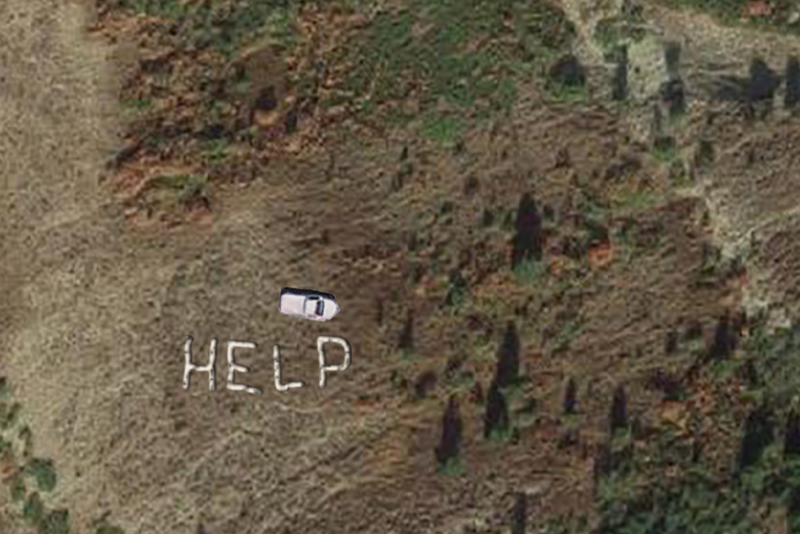
- Letters and messages: Spell out "HELP" or "SOS" on the ground using 12-foot-tall block letters. Use rocks, logs, or bright gear to make the letters contrast with the ground. You can also stomp the letters into deep snow or dig them into dirt or sand.
- Flags and body signals: Tie a bright red cloth to a long stick and wave it as a signal flag. If you have no flag, stand in an open area and wave both arms high over your head.
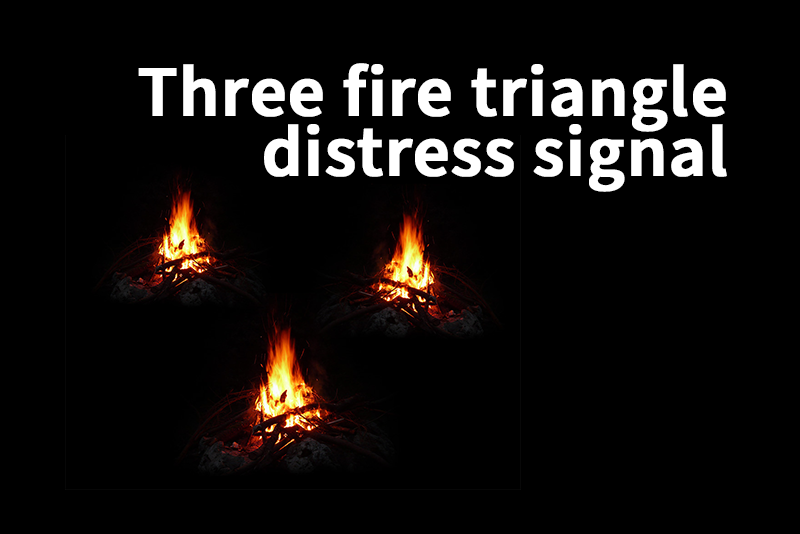
Smoke and fire: Fire provides heat, light, and a strong visual signal.
If you are limited on fuel for your fire or you are moving, have some fire making tinder ready to go to quickly make a signal fire if you hear or see rescue vehicles or aircraft.
Be careful to not put out your fire, or to let it spread beyond your control.
- Daytime: Add green leaves, grass, or even rubber tires to your fire to create thick smoke that stands out against the sky.
- Nighttime: Build three separate fires arranged in a triangle. Three fires in a triangle is another signal of distress. Build your fires in an area that is easily seen from the air like open clearings or on ridge tops rather than under thick trees.