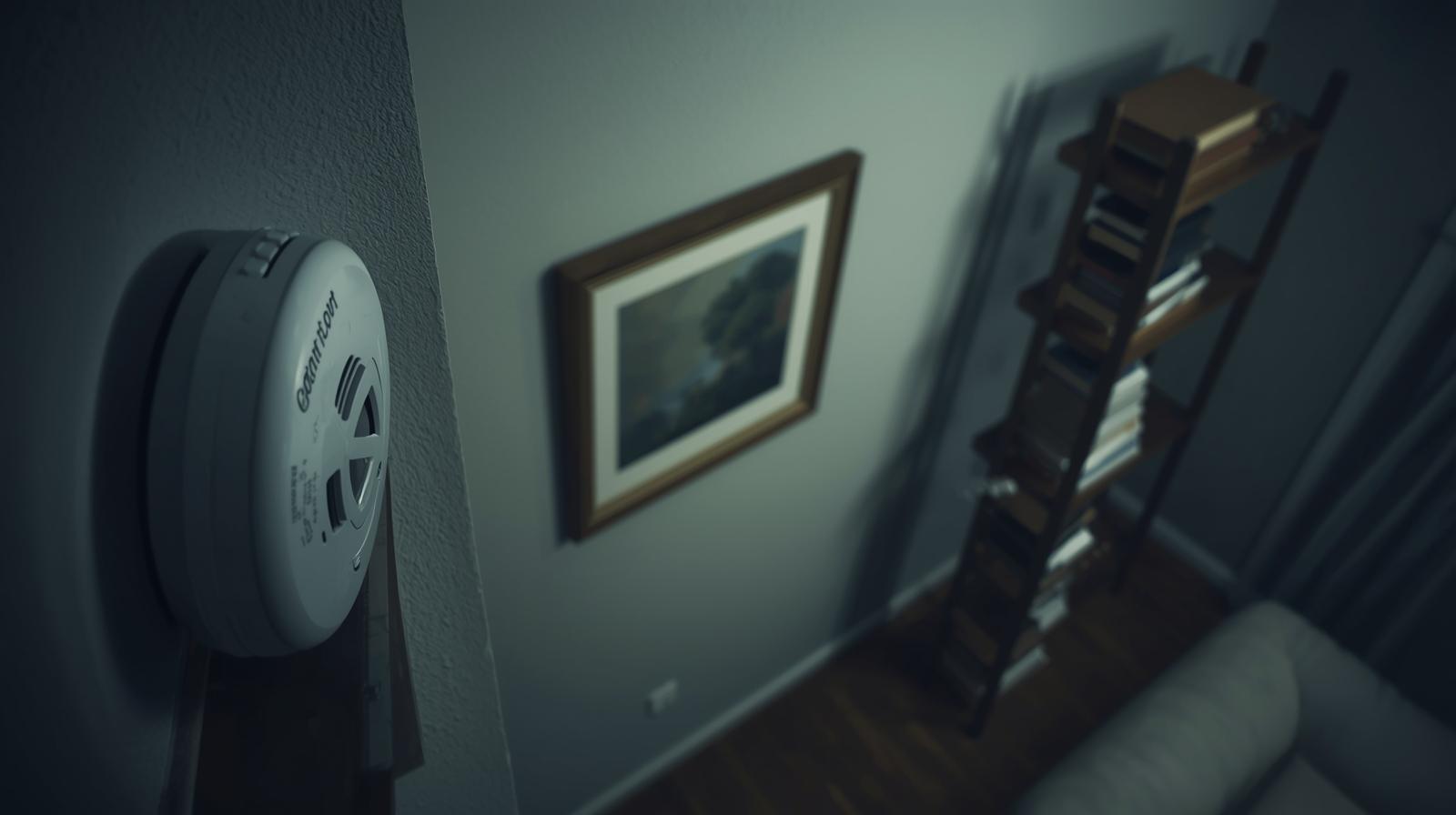
Install smoke detectors on every floor and inside or near every bedroom. Test monthly.
Install carbon monoxide (CO) detectors on every floor. Test monthly.
Replace batteries in smoke and carbon monoxide detectors every six months.
Make sure dangerous products and cleaners are labeled and stored separately from food, beverages, and medicine.
Secure rugs and carpets to the stairs or remove them.
Be sure stairways, porches, and walkways are lit.
Be sure house number is clearly visible from the street, day and night.
Make sure automatic garage door opener has an auto-reverse feature to prevent
injuries.
Earthquake Hazards
Secure entertainment centers, cabinets, bookcases, refrigerators, freezers, free-standing flat screen TVs, and tall bookshelves to wall studs with “L” shaped brackets or furniture safety straps.
Secure items on shelves to prevent toppling.
Use earthquake picture wall hangers for large, heavy, hanging pictures.
Remove objects from above beds.
Place heavier items on lower shelves and lighter items above.
Secure food storage, glass canning jars, books, paint, cleaning supplies, etc., with rope, boards or other bracing in front of shelves to prevent falling.
Install cupboard locks to prevent doors from swinging open and contents falling out.
If necessary, consult a trusted contractor regarding structural reinforcement.
Fire Hazards
Keep fire extinguishers in or near utility room, kitchen, laundry room, garage, and any other room that contains a major heat source. Know how to operate properly.
Have all HVAC systems, flue pipes, vents, and chimneys inspected and cleaned yearly.
Keep curtains, potholders, or other combustibles away from cooking ranges or other heat sources.
Keep the stove, oven, and broiler clean of grease.
Only store fuels like gasoline, kerosene, and propane in an outbuilding away from the home.
Clear brush, leaves, debris, and other combustibles from around your home. Use
fire-resistant landscaping, and fire-safe construction.
If the garage is attached, make sure a tight-fitting, self-closing, fire door is used in the doorway between the garage and the house.
Evacuation and Escape Hazards
Make sure there are at least two escape routes from every room.
Make sure upper-floor rooms have an emergency ladder or other means of escape.
Make sure all exterior doors and windows have locks that unlock and open easily from the inside.
Make sure all deadbolt locks have an inside thumb turn lock, not a key lock. A missing key could trap you inside.
Make sure security bars have an inside release latch.
Install night-lights and emergency lights in hallways and along emergency escape
routes.
Utilities Hazards
Keep a shut-off tool or adjustable wrench near the outside gas meter in case of a gas leak.
Keep flashlights and spare batteries easily accessible and in working order in the event of a power outage. Flashlights are safer than candles.
Only allow qualified electricians to install or repair your wiring.
Have enough electrical outlets in every room to avoid the need for multiple plug
attachments or long extension cords.
Know how to safely reset breakers or replace fuses.
Do not run extension cords under rugs, furniture, over hooks, or through doorways.
Make sure all outlets and switches have properly fitting face plates.
Make sure bulbs are the correct wattage for the lamps or light fixtures in which they are used.
Too many appliances using the same outlet can cause a fire. Use outlets properly and use surge protectors as needed.
Set water heater to 120o F to prevent scalding.
Secure the water heater and any other gas appliance to wall studs with sturdy
earthquake straps and make sure it is connected to the gas main with a flexible gas line.
Teach all responsible people how, when, and where to turn off main water, gas, and electricity.
Make sure all appliances have an Underwriters Laboratories (UL) mark or stamp.
Make sure all electrical outlets in bathrooms and near water use a Ground Fault Circuit Interrupter (GFCI) to prevent shock.
Hazards that Affect Children
Keep children away from the range when cooking.
Use product safety caps and cupboard locks.
Properly install toilet seat locks.
Keep medicines, cosmetics, and cleaners locked up.
Keep window blind cords up out of reach and cut the cord loop in two pieces to prevent strangling.
Install window guards in upper windows to prevent falling out.
Install gates at the top and bottom of staircases.
Install safety caps over electrical outlets.
Store large buckets upside down to prevent collecting water and creating a drowning hazard.